RATOR
Understanding how a sector operates, to accelerate the transition
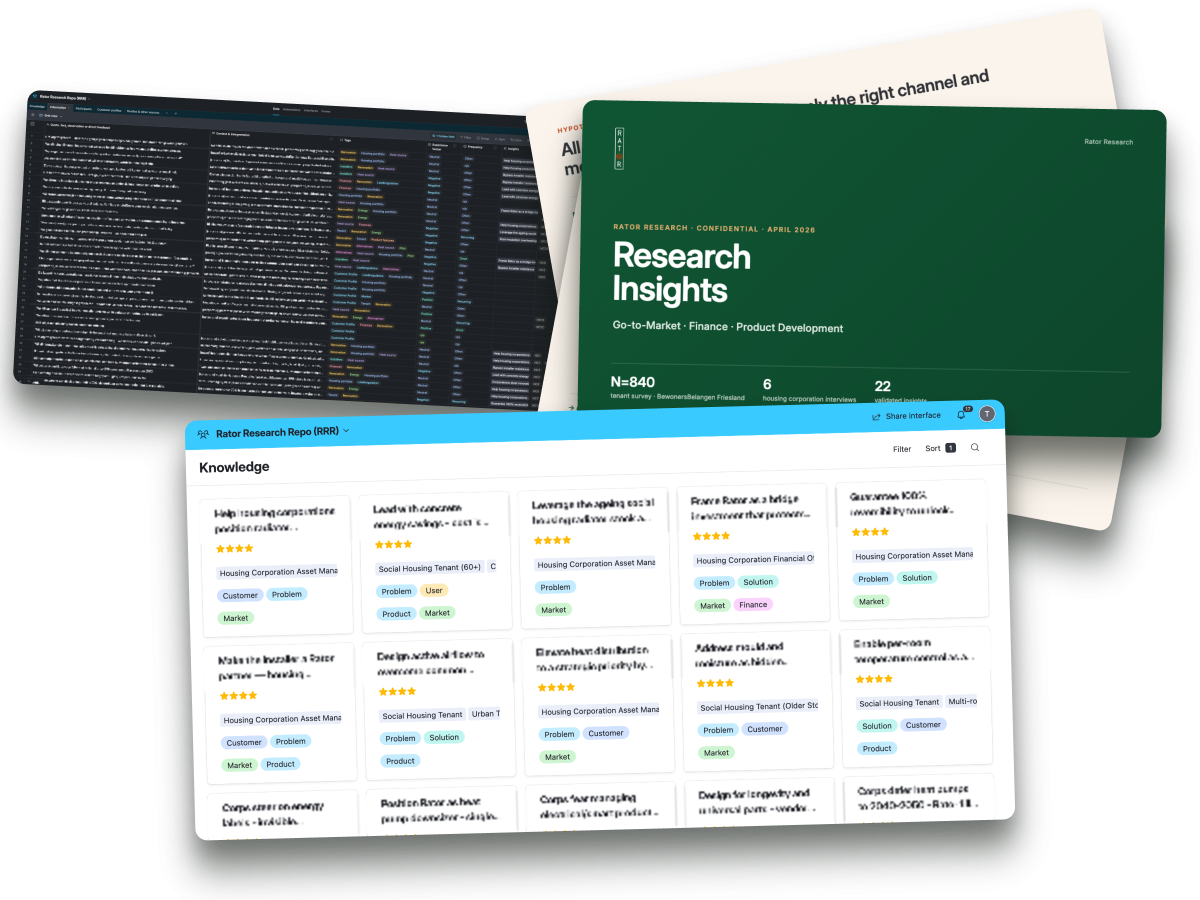
Rator builds smart radiators to help tenants of housing corporations use less gas. But housing corporations are large organisations with their own budgets, processes and gatekeepers. We needed to understand their pains, processes and how our product could fit within this context.
For this, I created and ran interviews with six housing corporations and a survey with 840 tenants. With AI to speed up the analysis, I distilled it into 22 insights, each with a clear recommendation.
The findings reshaped the product and our approach: who to contact, how to fit in their planning and goals, and several product design decisions. They now steer the MVP and the roadmap.
User Research · Service Design · Customer Development
RATOR
Translating customer insights into a product story and the materials that carry it
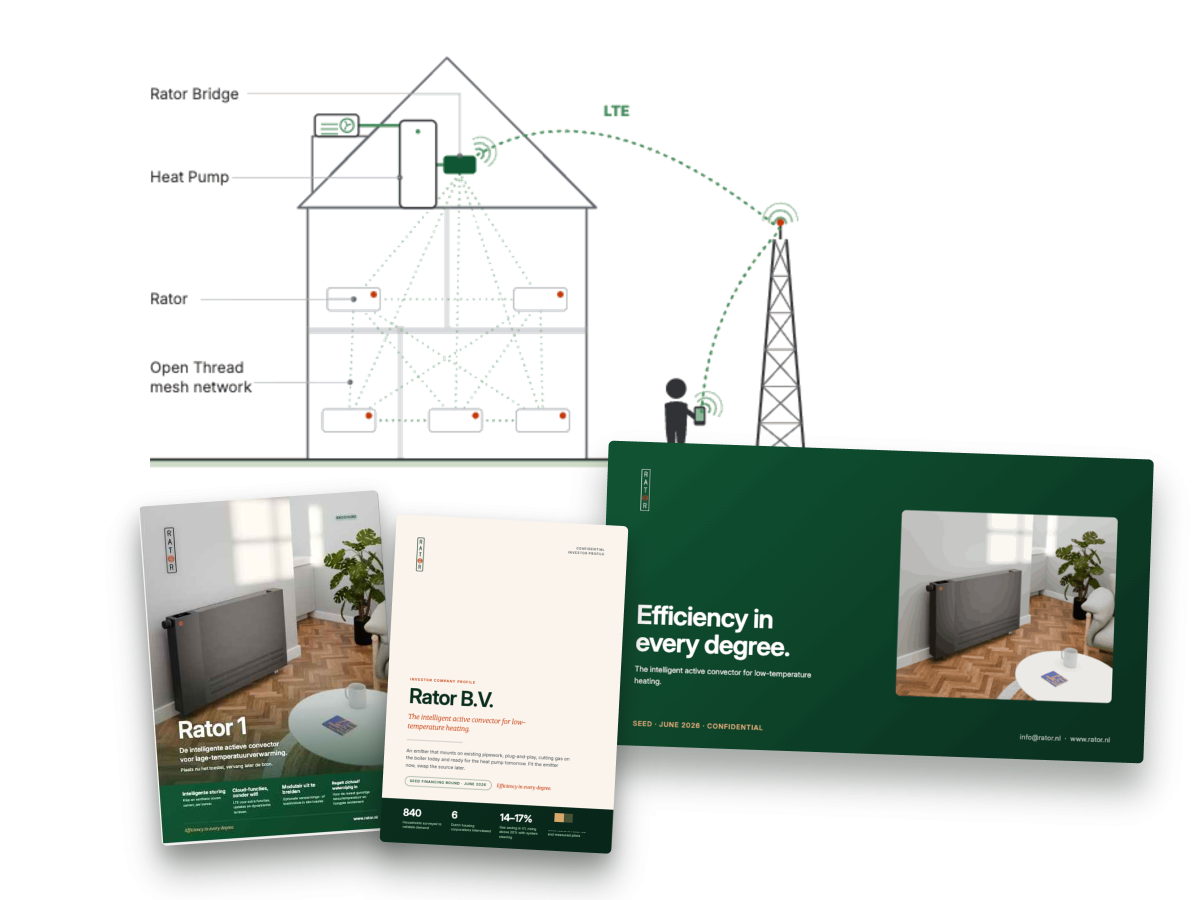
Research told us what housing corporations and their tenants needed: zone control, no management, and a clear efficiency argument for their heat pump.
I translated those findings into a product feature set that matched those needs, and defined how to communicate it to different stakeholders. With the use of AI, I then designed product brochure, presentation decks for different audiences, the company website and other artifacts. Each piece captures the features, benefits and technology in language built for the people making the decision.
The team now uses these to approach corporations, gather honest feedback, and test the proposition in the market.
Product Development Strategy · Digital Product Design
RATOR
A heating interface everyone in the home can use
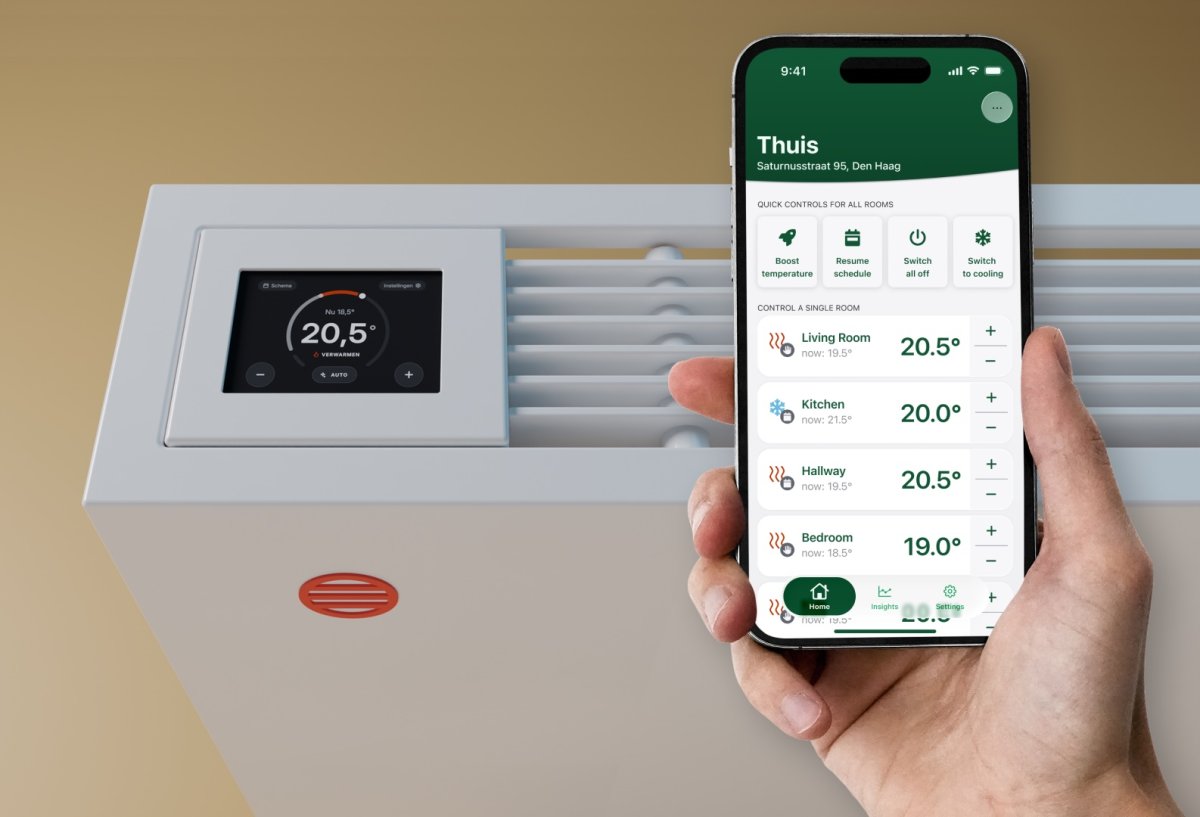
A radiator in social housing is used by everyone: older tenants, people with poor sight, people with different cultural backgrounds and people who have never owned a smart device. So the radiator had to be fully usable on the device itself, with the optional app for those who want scheduling or control from another room.
I designed the on-device menu and the app, from the temperature screen to settings for e.g. accessibility, language, and child lock. I also tested the interface against the European accessibility standard, which changed what the product needs to offer.
Because the screen runs on embedded firmware with strict limitations, I handed it over as an explicit set of rules developers could build from directly, and used AI to speed up that path from design to specification.
Axite
Reliable brain monitoring from the comfort of your home
Axite is revolutionizing brain health with tools that are affordable, fast, and user-friendly.
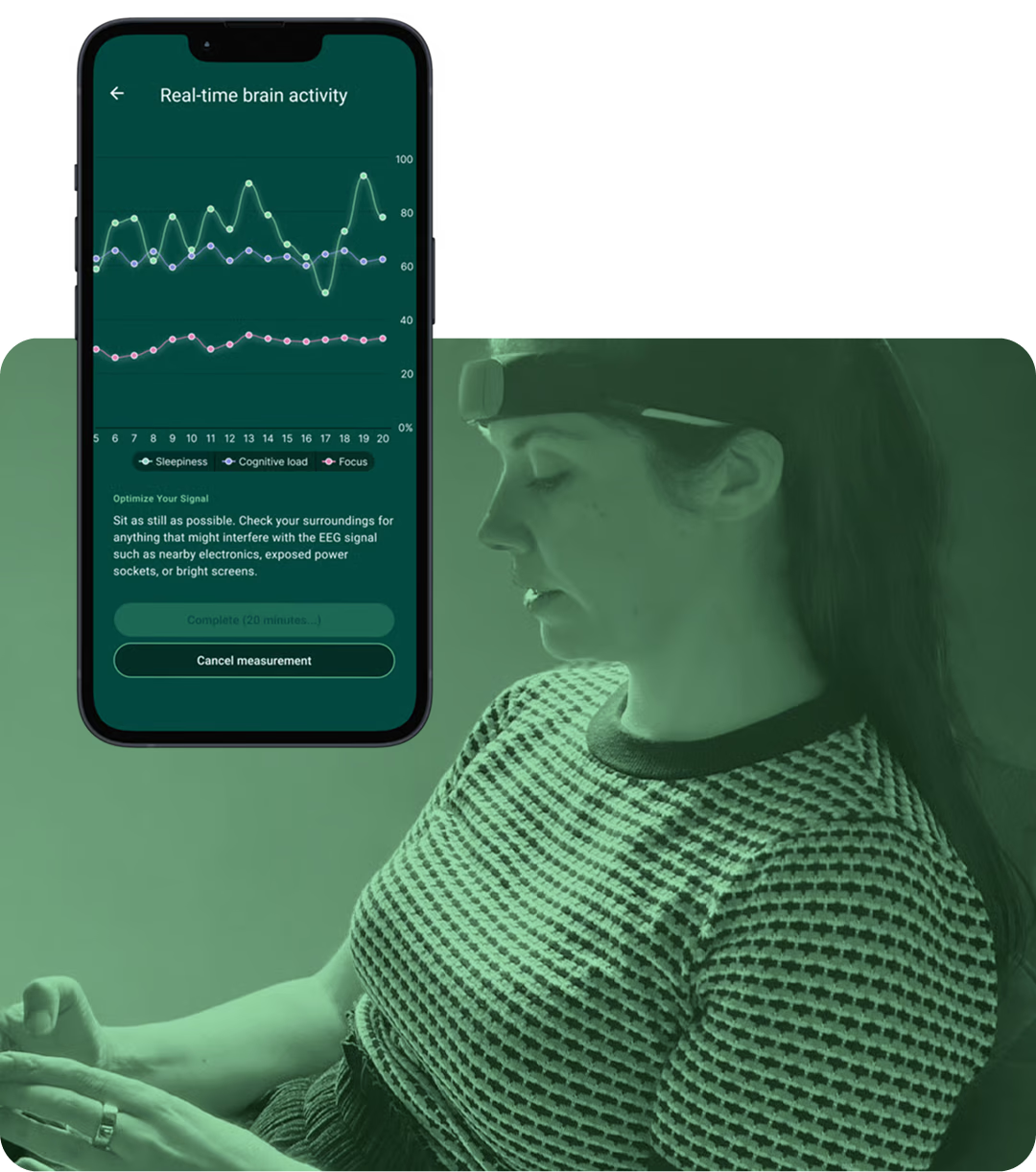
For their NeuroJournal app, I designed an intuitive interface, integrating real-time brain activity to self-defined tags. This empowering users to track their mental state objectively and free from bias.
With fresh funding and a growing vision, the startup is gaining momentum.
Municipality of Leiden
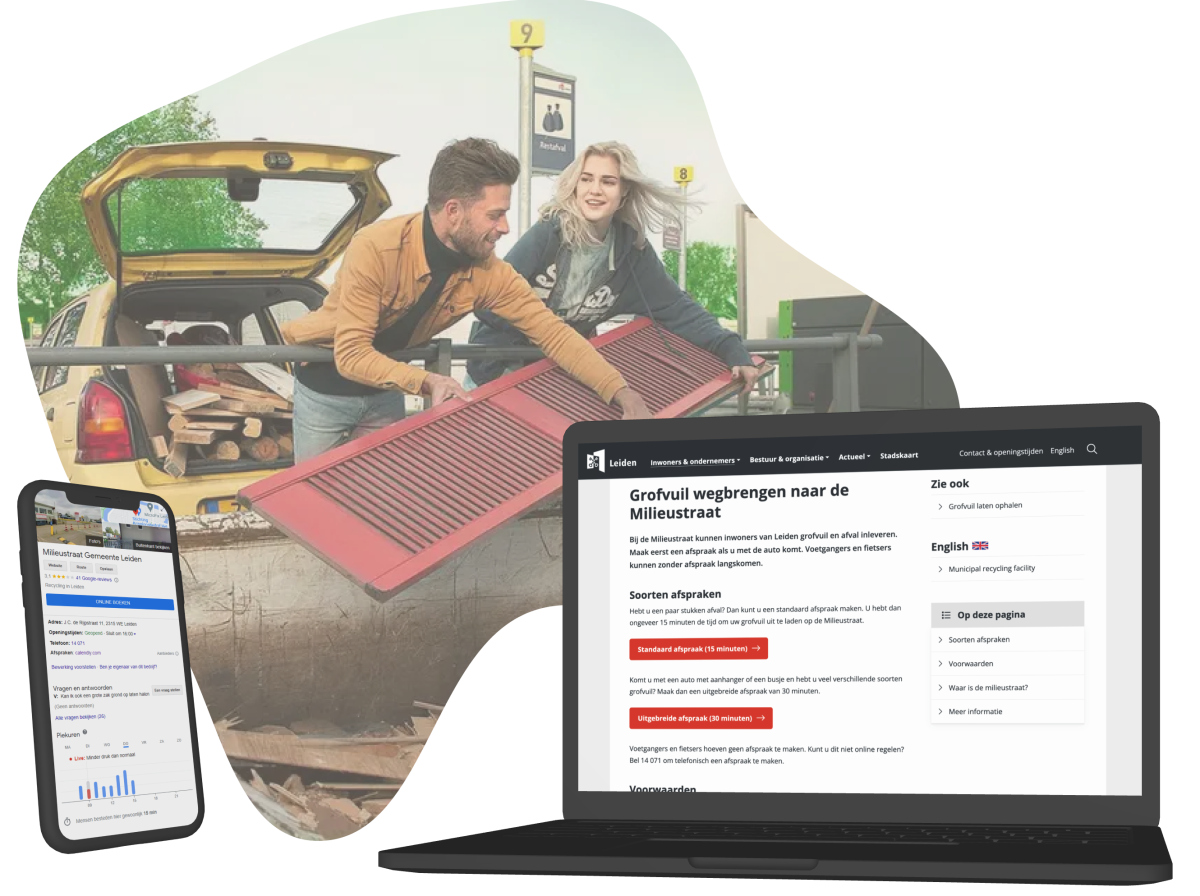
Alleviating a visit to the recycling center
Long queues, riots, traffic issues, and incorrect waste sorting resulted in operational difficulties at the recycling center, negative reviews by inhabitants, increasing costs and a negative effect on sustainability. In late 2022, an appointment system was introduced to address these problems.
As part of a multidisciplinary team, I gathered insights from users, systems data and experts to design solutions. I then implemented a data-informed decision-making process to measure the impact of the improvements we were creating.
MUNICIPALITY OF LEIDEN
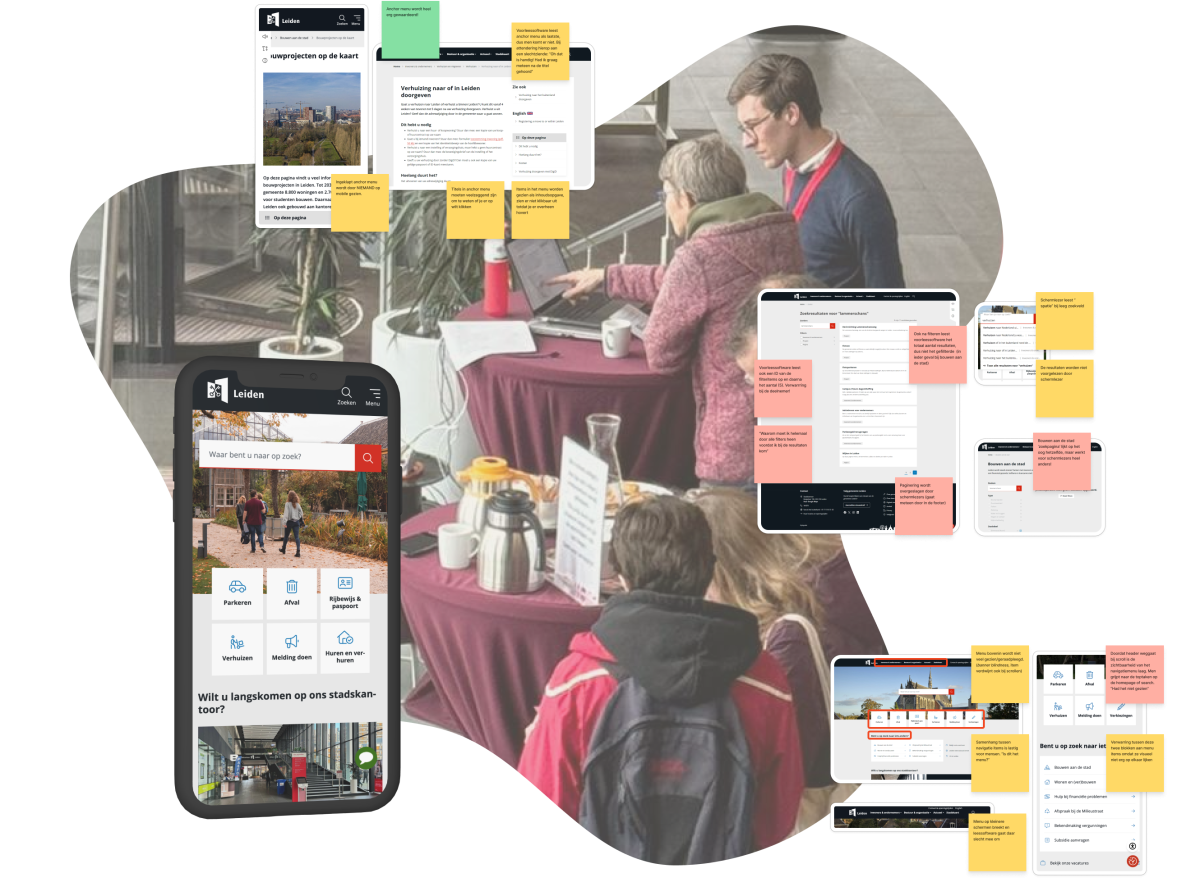
Identifying accessibility improvements for the new municipality website
In developing Leiden's new municipal website, I led a study to identify accessibility, findability, and usability issues. I lead a team that used three methods to uncover issues on various levels: guerrilla testing with city hall visitors, qualitative research with people with cognitive and visual disabilities, and an expert review by usability professionals at other governmental organizations.
Issues were prioritized and quickly resolved or added to the development kanban board.
Municipality of Leiden
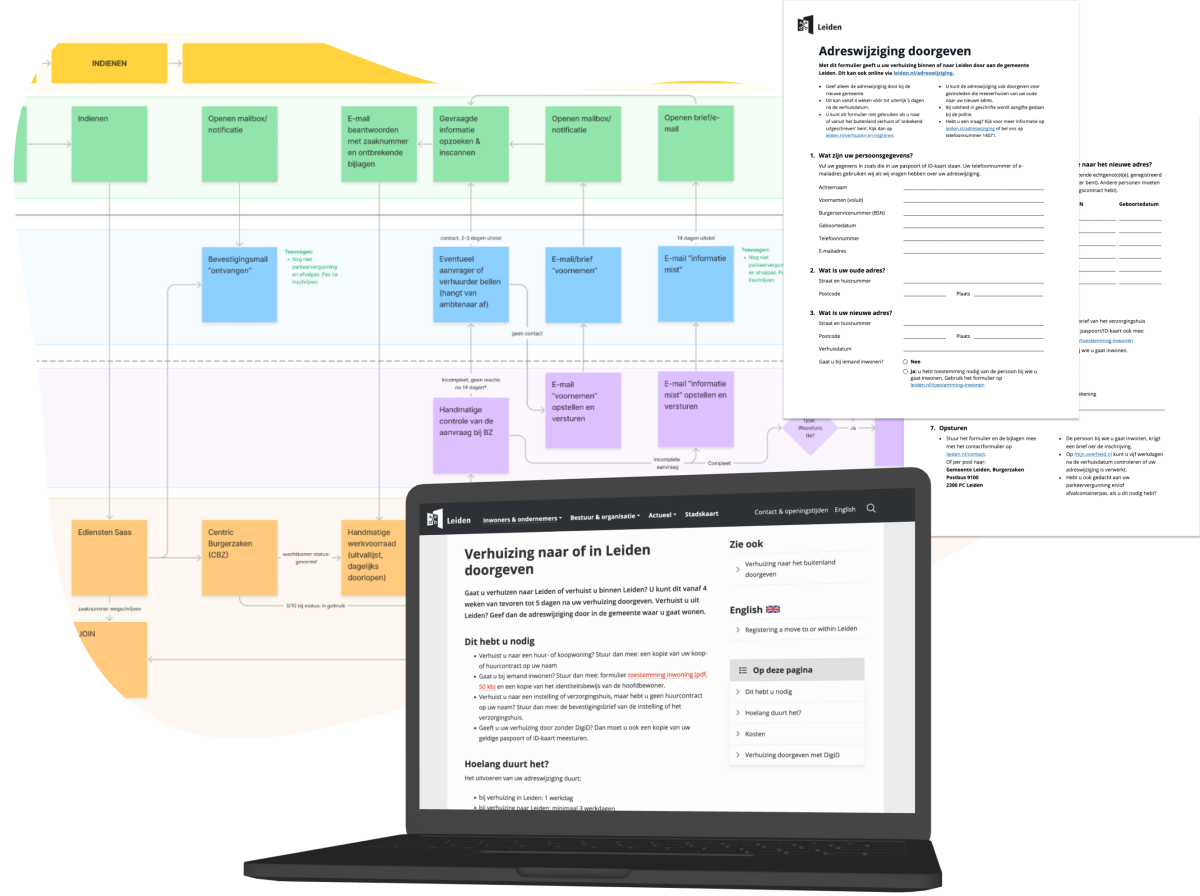
Increased correct manual requests for moves to Leiden
Each year, around 200 manual move applications in Leiden contained costly errors.
I led a multidisciplinary team to fix this. We redesigned forms, enhanced address datasets to support more digital applications, and updated the website.
The result: less manual applications, fewer errors, faster processing, and a better service for future residents.
Municipality of Leiden
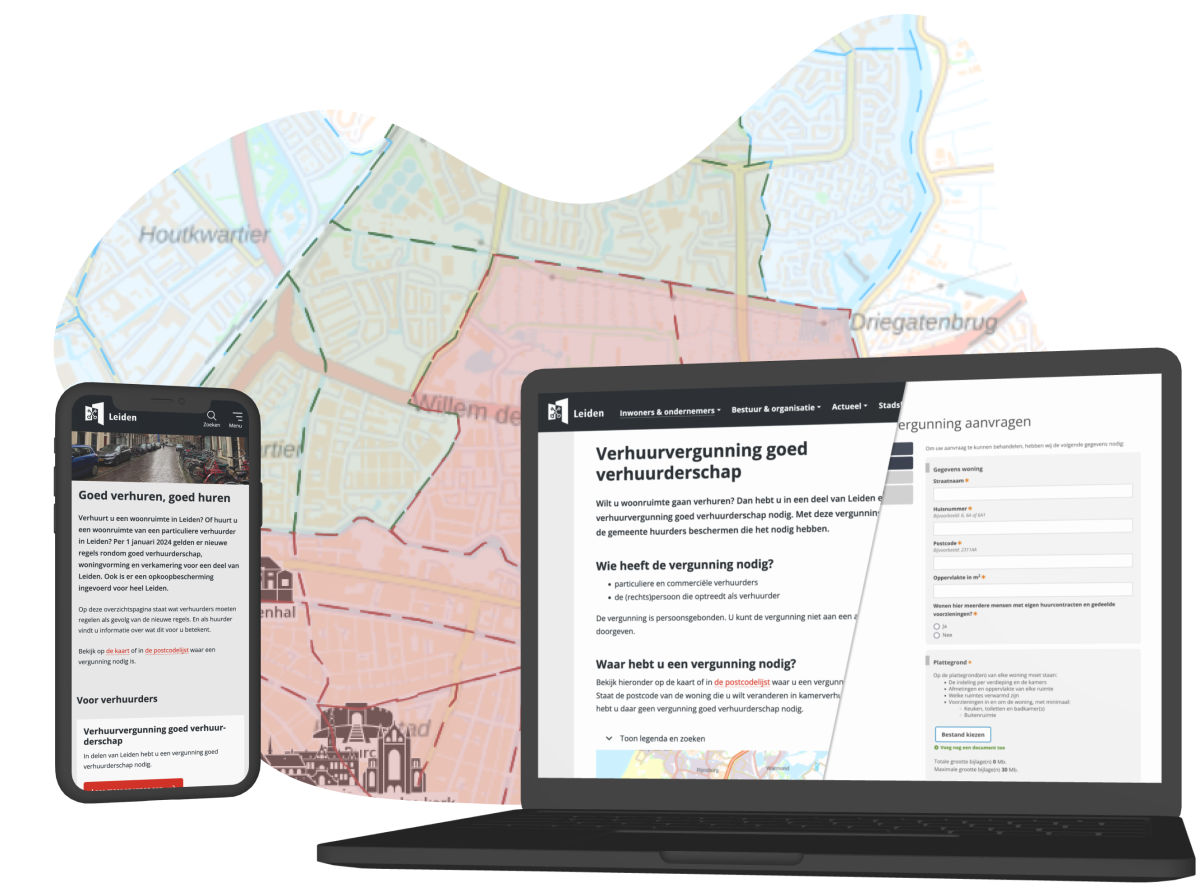
Improving understandability and usability for four confederate permits
In rental-heavy areas, livability pressures have risen. To address this, permits for various situations were introduced in 2024, allowing landlords to rent homes under conditions. Initially, landlords had many questions about the permits and their coherence, and many applications were having errors.
By analyzing the intention of regulation, visitor behavior, questions, and internal work processes, we could clarify information on the website and application forms for each product and their coherence.
The result reduced questions from landlords and increased application completeness and correctness.
Priva smart building
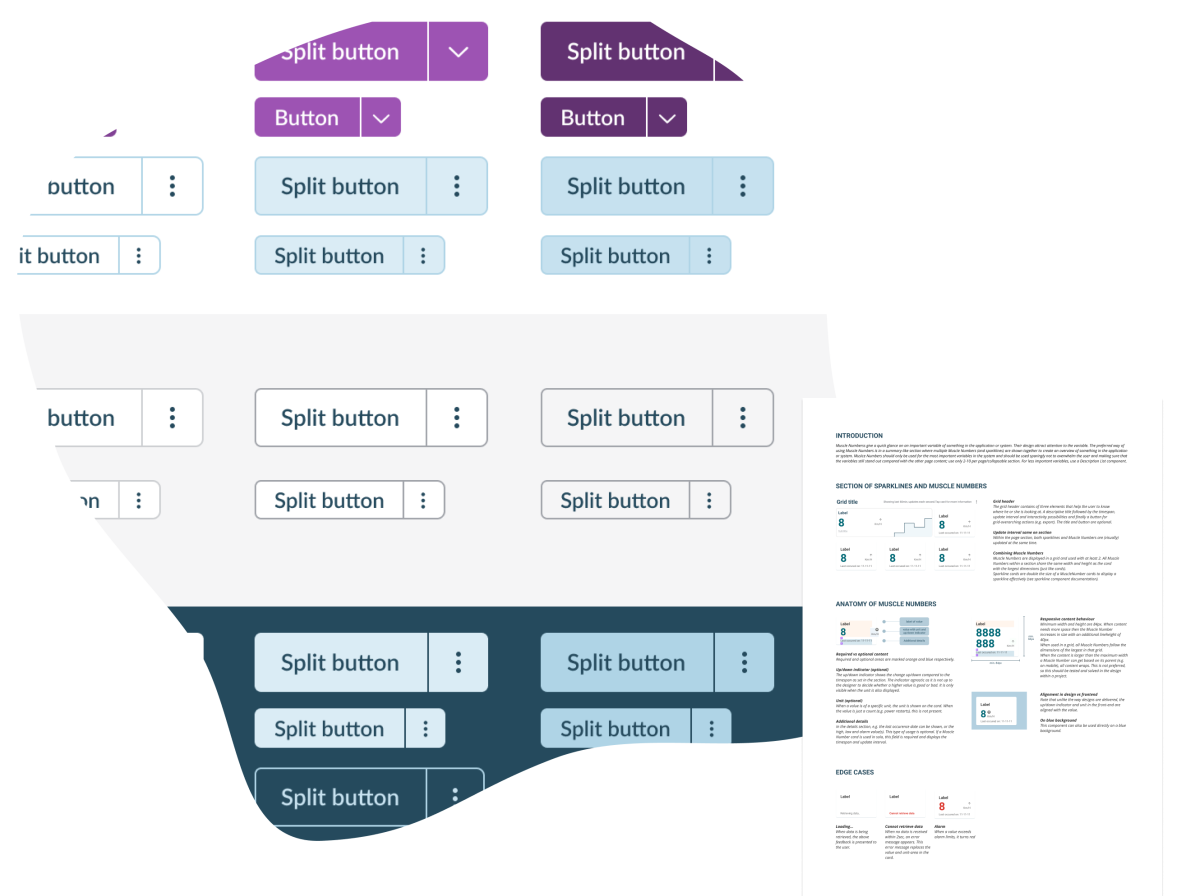
Consistent interactions in all products for multiple markets
With a growing portfolio of products, there was a need to make interactions between them consistent and to speed up development.
I designed and documented several components and interaction patterns. I also contributed to those of other designers and supported development in realizing code-versions of the components.
As a result, the Priva Design System is seen as an in-house service that is used by all developers working on cloud solutions. It gets the backing and support from managers and product owners.
priva SMART building
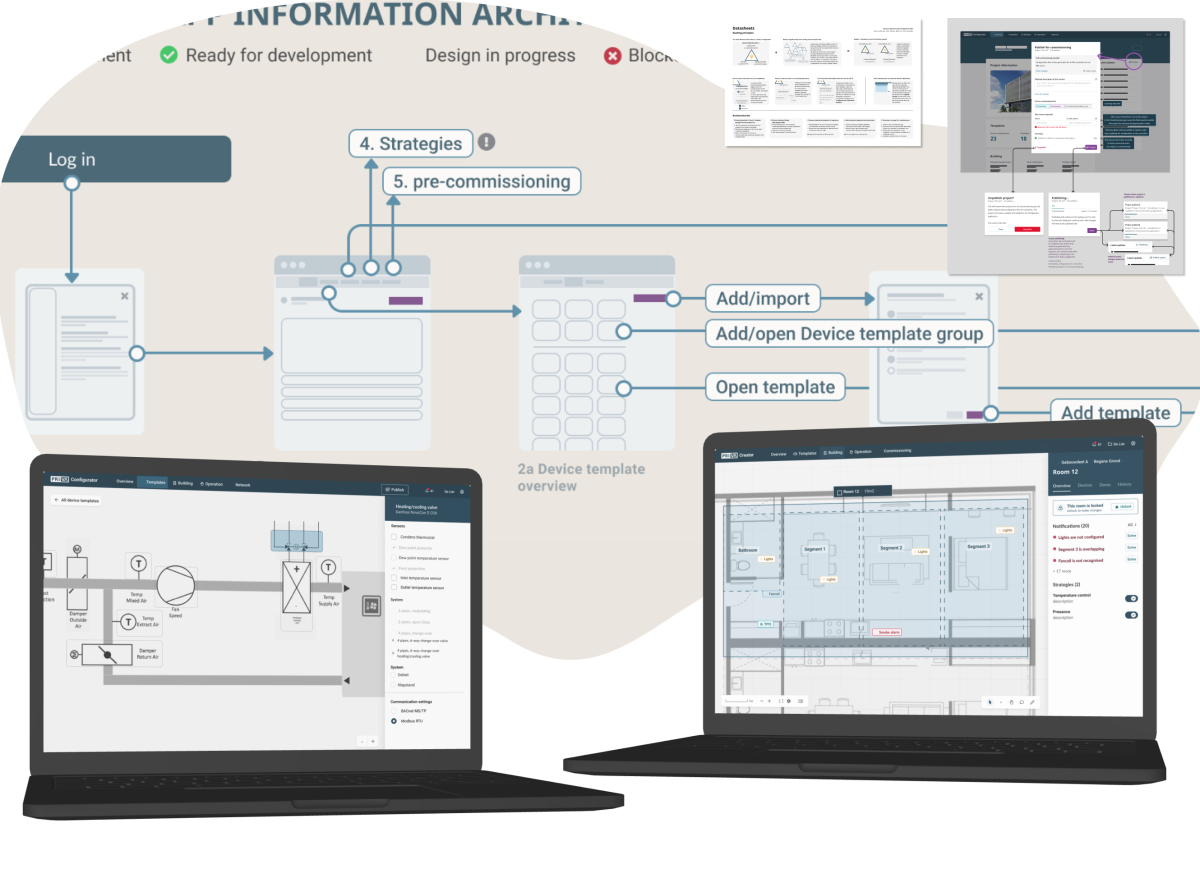
Empowering engineers of building management systems
Engineers of building management systems (BMS) face repetitive work and high cognitive loads. With a growing complexity of the domain, and fewer skilled engineers, this was becoming a problem for building automation companies. Priva decided to redesign their BMS engineering software to simplify and speed up the development process, especially for engineers with limited domain knowledge.
Priva smart building
Speeding up commissioning of building management systems
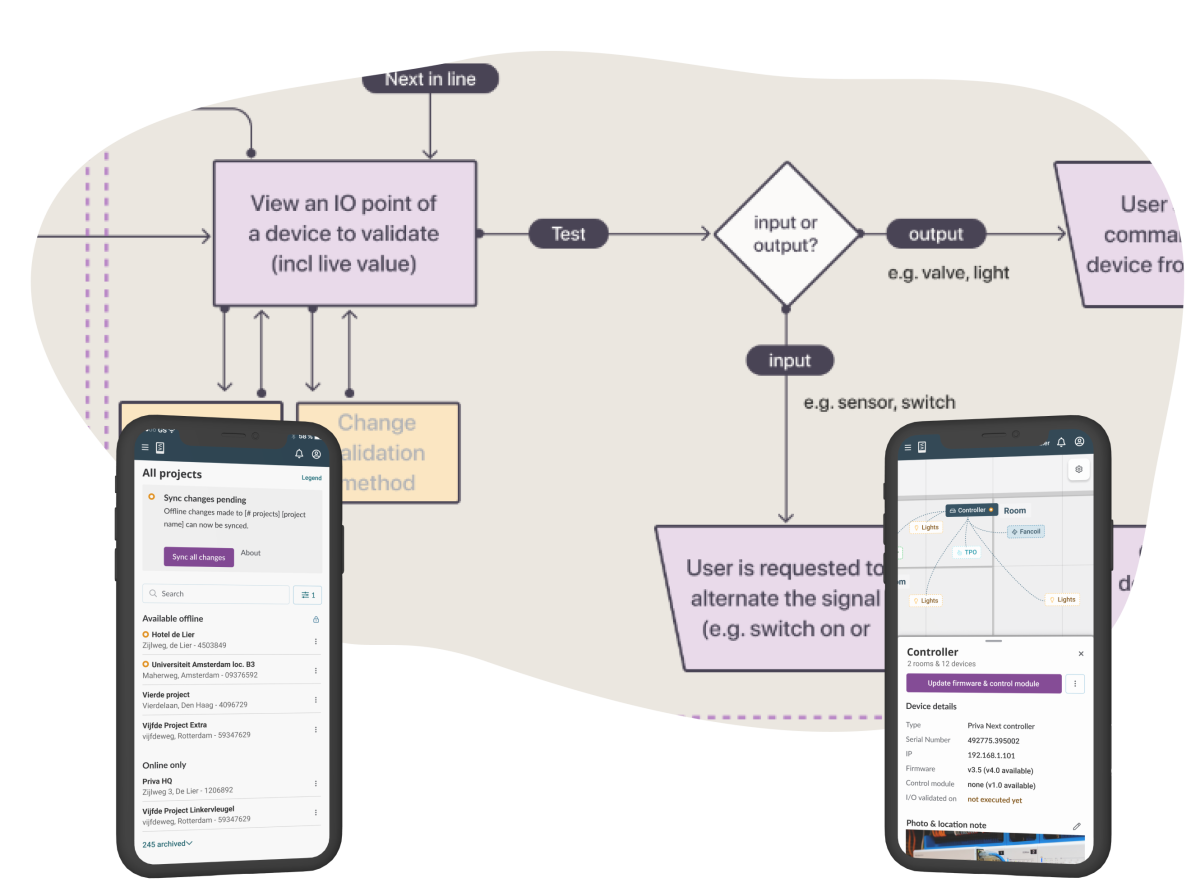
Commissioners of building management systems (BMS) deal with many small tasks with long waits, while fixing issues in the BMS software can be challenging. With a growing complexity of the domain, and fewer skilled engineers, this was becoming a problem for building automation companies. Priva aimed to streamline and add flexibility in the process.
After analyzing users’ workflows, I designed a new workflow and validated it. I then crafted a hybrid app that also supported for collaboration between commissioners and engineers. The resulting product made the commissioning process faster, more reliable, flexible, and easier for less skilled commissioners.
NEXTENS
Enabling tax advice opportunities for accountants
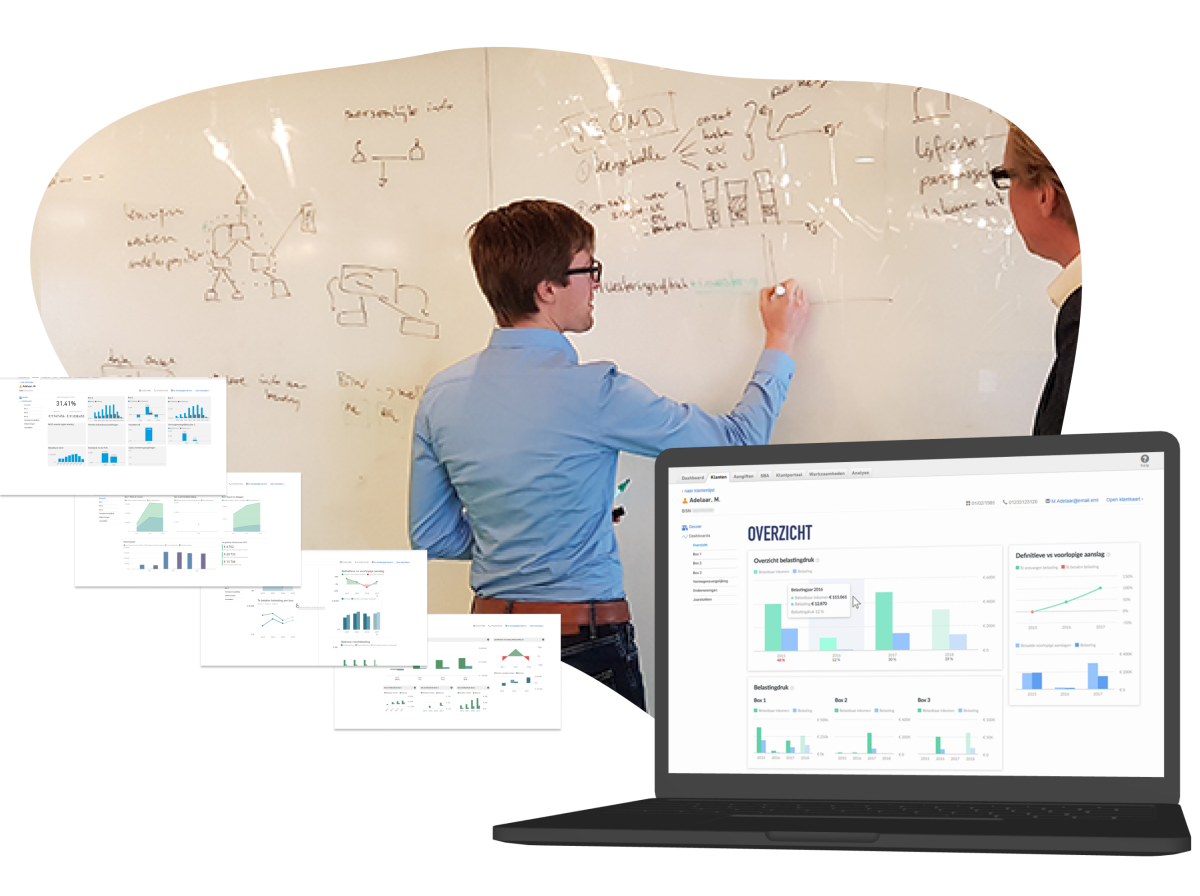
Customers of tax SAAS Nextens are shifting from tax filing to advisory services. Nextens wanted to support their users in signaling advice opportunities by visualizing year-on-year changes in clients’ tax data.
I set up a continuous triangular user research process, facilitated data-visualization co-creation workshops, and designed interactive dashboards to tell the story of the client. Collaborating with a visual designer, we optimized dashboards for the visually impaired and aligned them with the new Nextens style guide.
After alpha- and beta- releases in which further feedback was gathered and improvements were made, the result is a valued expansion of the Nextens suite.
These and other projects follow the same approach
I combine research, design and strategy to unlock a powerful, iterative cycle of progress. It allows you to successfully navigate uncertainty and move forward with purpose. That’s how UX drives impact!